1st Bn The Winnipeg Grenadiers
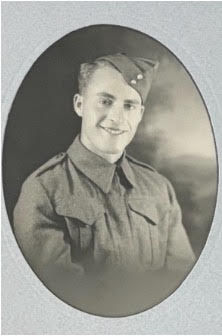
General Information |
||
| Rank: | First Name: | Second Name: |
|---|---|---|
| Private | Roland | Ernest |
| From: | Enlistment Region: | Date of Birth (y-m-d): |
| Big River SK | Saskatchewan | 1918-06-05 |
Transportation - Home Base to Hong Kong
Members of 'C' Force from the East travelled across Canada by CNR troop train, picking up reinforcements enroute. Stops included Valcartier, Montreal, Ottawa, Armstrong ON, Capreol ON, Winnipeg, Melville SK, Saskatoon, Edmonton, Jasper, and Vancouver, arriving in Vancouver on Oct 27 at 0800 hrs.
The Winnipeg Grenadiers and the local soldiers that were with Brigade Headquarters from Winnipeg to BC travelled on a CPR train to Vancouver.
All members embarked from Vancouver on the ships AWATEA and PRINCE ROBERT. AWATEA was a New Zealand Liner and the PRINCE ROBERT was a converted cruiser. "C" Company of the Rifles was assigned to the PRINCE ROBERT, everyone else boarded the AWATEA. The ships sailed from Vancouver on Oct 27th and arrived in Hong Kong on November 16th, having made brief stops enroute at Honolulu and Manila.
Equipment earmarked for 'C' Force use was loaded on the ship DON JOSE, but would never reach Hong Kong as it was rerouted to Manila when hostilities commenced.
On arrival, all troops were quartered at Nanking Barracks, Sham Shui Po Camp, in Kowloon.
Battle Information
We do not have specific battle information for this soldier in our online database. For a detailed description of the battle from a Canadian perspective, visit Canadian Participation in the Defense of Hong Kong (published by the Historical Section, Canadian Military Headquarters).
POW Camps
| Camp ID | Camp Name | Location | Company | Type of Work | Arrival Date | Departure Date |
|---|---|---|---|---|---|---|
| HK-NP-01 | North Point | North Point, Hong Kong Island | N/A | N/A | ||
| HK-AS-01 | Argyle Street | Kowloon, Hong Kong | N/A | N/A | ||
| HK-SA-01 | Shamshuipo | Kowloon, Hong Kong | Capture | 42 Jan 22 | ||
| HK-NP-02 | North Point | North Point, Hong Kong Island | 42 Jan 22 | 42 Sep 26 | ||
| HK-SA-02 | Shamshuipo | Kowloon, Hong Kong | 42 Sep 26 | 43 Jan 19 | ||
| JP-To-3D | Tsurumi | Yokohama-shi, Tsurumi-ku, Suyehiro-cho, 1-chome, Japan | Nippon Steel Tube - Tsurumi Shipyards | Variety of jobs related to ship building | 43 Jan 19 | N/A |
Transport to Japan
| Draft Number | Name of Ship | Departure Date | Arrival Date | Arrival Port | Comments | Reference |
|---|---|---|---|---|---|---|
| XD3A | Tatuta Maru | 43 Jan 19, left Shamsuipo Camp, 0500 hrs; left Hong Kong 1300hrs | 43 Jan 22, 0400 hrs | Nagasaki, Japan | Boarded train, arrived in Tokyo on 43 Jan 24 at 0700 hrs, boarded electric train for 10 mile ride to camp | Tony Banham |
Transportation SE Asia to Home
| Transport Mode | Arrival Destination | Arrival Date | Comments |
|---|---|---|---|
| USS Ozark Passenger List A | SF | 1945-10-02 | evacuated from Japan via USS Ozark |
No other or additional related information found. Please submit documents to us using the contact link at the top of this page.
Post-war Photo
No other or additional related information found. Please submit documents to us using the contact link at the top of this page.
Other Military or Public Service
No other or additional related information found. Please submit documents to us using the contact link at the top of this page.
Death and Cemetery Information
| Date of Death (y-m-d) | Cause of Death | Death Class | |
|---|---|---|---|
| 1999-11-13 | Post War | ||
| Cemetery Location | Cemetery | Grave Number | Gravestone Marker |
| Prince Albert Saskatchewan Canada | South Hill Cemetery | ||
Gravestone Image

Obituary / Life Story
No other or additional related information found. Please submit documents to us using the contact link at the top of this page.
General Comments
Harrowing Experience for Pte. R. Dube in Jap Hands
BIG RIVER- Pte. Roland Dube, son of Mr. and Mrs. Paul Dube of Big River, arrived home Friday, October 12, after almost four years in a Japanese prison camp. Private Dube joined up with the South Saskatchewan Regiment in 1940, and later transferred to the Winnipeg Grenadiers just in time to go to Hong Kong with that regiment, landing there in November, 1941.
He said on the morning of December 8, 1941, they were out counting what they believed to be Allied planes overhead, when the bombs started to fall with no warning. From then until Christmas Day, when the Hong Kong garrison fell, they tried in vain to defend the city. He said their heavy artillery was sunk and never reached them.
He was held prisoner for two years in Hong Kong, where he suffered from diphtheria and starvation, and dropped from his normal weight of 140 pounds to 80 pounds. He was then moved along with 500 other prisoners to the Japanese mainland to a place called Niigata. These 500 were crowded into the hold of a small, dirty ship and fed nothing but a thin spice soup during the 18 days journey to Osaka. From there the party went by rail, and he was surprised by the modern train they travelled. In Niigata they were divided into three work groups, one working in a foundry, one unloading coal, and his group unloading and loading cargo ships at the dockyards.
NO SHOES
The first winter there they no shoes, and had to work in mud and snow in their bare feet. He said they were so cold and hungry he hates to think about it. They would pick up any garbage they saw along their two-mile to work, even dead house rats which they would cook with stolen charcoal, to try to get enough eat. They stole what rice and beans they could, but if they were caught they were severely punished.
They were subjected to a great deal of slapping and mauling, particularly for not understanding Japanese guards. One time when caught with stolen beans they were left standing all night and taken out to work the next day with no food.
We were lucky, said Private Dube, as many had been tied to the fence and left until dead. Many of the prisoners died from starvation. Their diet was mostly rice or bean soup and grasshoppers. Often they were given no breakfast and many fainted before noon.
FEW PARCELS
Few Red Cross parcels came through and then they were pilfered by the guards before being given to the prisoners. Private Dube told of one of his guards which he watched trying to wash himself with a block of cheese, and saying that the soap was no good. Private Dube, knowing the guard had cheese, got the Jap to exchange for it a cake of soap he had received in a Christmas parcel. Even though the Jap had been trying to wash himself with it, it was food.
They saved Klim cans from their Red Cross parcels to cook what food they were able to steal, using charcoal for heat, as it did not flame and was not easily detected by the guards. There were only mud floors in the camps, and for sleeping they had straw mattresses side by side on a long wooden platform. There were only two huts for the 750 prisoners.
Sanitary conditions were bad. There were no means for keeping themselves washed or free from lice and fleas, so with the pangs of hunger and the annoyance of vermin, sleep was hard to get.
American fliers were treated brutally, being tortured by the Japanese in an effort to get military information. Many died from the treatment they received.
Dysentery was prevalent in the camps. Camp doctors were given no medicines, but did the best they could to help the sick. They were issued Japanese army uniforms but these were much too small for the average Canadian American soldier. They never had any news of the outside world and the guards delighted in discouraging them with bad reports on the war.
They first heard of the end of the war with Japan August 17. and were released September 5. In the meantime B29's dropped food to them by parachute, but he said they all overate. In passing Tokyo and, Yokohama on the way home he remarked on the devastation. Private Dube has three sisters, Mrs. A. Larson and Mrs. L. Oldham of Big River and Miss T. Dube, teaching at Fir Ridge, Saskatchewan.
Links and Other Resources
There may be more information on this individual available elsewhere on our web sites - please use the search tool found in the upper right corner of this page to view sources.
Related documentation
Our HKVCA Vault (Google Docs) may contain additional information, newspaper clippings, and documents which have been saved for this soldier. To access this information, note the soldier's service number shown at the top of this page, then use the letter prefix to select the corresponding link below. A Google Docs folder list will open in a separate tab. Search for the file identified by the service number to access any additional information we may have acquired.
- Service Number Prefix: A to G
- Service Number Prefix: H to P
- Service Number Prefix: X (Officers)
Facebook has proven to be a valuable resource in the documentation of 'C' Force members. The following link will take you to search results for this soldier based on his regimental number, but they may be incomplete.
Facebook Search Results.
To capture all items for an individual, we recommend visiting our Group: Hong Kong Veterans Tribute of Canada and using the search option there. Note: results may be contained within another related record.
Find a Grave® is a valuable resource that may contain additional information on this 'C' Force member. When you arrive at the site search page, fill in as much detail as you can for best results.
End of Report.
Report generated: 18 Sep 2026.
Additional Notes
(These will not be visible on the printed copy)
NOTE: This report layout has been updated as of September 2026. Some data previously displayed could not be validated and has been removed. Removed data includes: Appointment, Company, Platoon, Wounded Information, and Hospital Visits. If it exists, information on these items may be found in our Vault.
- Service numbers for officers ("X") are locally generated for reporting only. During World War II officers were not allocated service numbers until 1945.
- 'C' Force soldiers who died overseas are memorialized in the Books of Remembrance and the Canadian Virtual War Memorial, both sponsored by Veterans Affairs Canada. Please use the search utility at VAC to assist you.
- Some birthdates and deathdates display as follows: 1918-00-00. In general, this indicates that we know the year but not the month or day.
- Our POW camp links along with our References link (near the bottom of the 'C' Force home page) are designed to give you a starting point for your research. There were many camps with many name changes. The best resource for all POW camps in Japan is the Roger Mansell Center for Research site.
- In most cases the rank displayed was the rank held before hostilities. Some veterans were promoted at some point prior to eventual post-war release from the army back in Canada. When notified of these changes we'll update the individual's record.
- Images displayed on the web page are small, but in many cases the actual image is larger. Hover over any image and you will see a popup if a larger version is available. You can also right-click on some images and select the option to view the image separately. Not all images have larger versions. Contact us to confirm whether a large copy of an image in which you are interested exists.
- The 'From' information box at the top of the report represents the enlistment location unless we have obtained updated information pinpointing where the member lived.
- In some cases the References displayed as part of this report generate questions because there is no indication of their meaning. They were inherited with the original database, and currently we do not know what the source is. We hope to solve this problem in future.
- We have done our best to avoid errors and omissions, but if you find any issues with this report, either in accuracy, completeness or layout, please contact us using the link at the top of this page.
- Photos are welcome! If a photo exists for a 'C' Force member that we have not included, or if you have a higher quality copy, please let us know by using the Contact Us link at the top of this page. We will then reply, providing instructions on submitting it.