For Remembrance Day this year, 2026, the Hong Kong Veterans Commemorative Association commemorates the 85th Anniversary of the Battle of Hong Kong (December 8–25, 1941), carrying the torch of memory for the 1,975 Canadian soldiers and two nurses that participated as ‘C’ Force in the defence of Hong Kong. It is also 30 years since the founding of HKVCA in 1996 by the descendants and families of Canada’s Hong Kong veterans.
To assist our members in this endeavour, information resources have been assembled to answer the many questions which we might have and which might be asked. The information has been organized in a question-and-answer format. These resources have been assembled by Phil Mondor (son of Paul Emile Mondor, Lance-Corporal, The Winnipeg Grenadiers, HQ Coy). If you have any further questions, write to osborn_vc@hkvca.ca.
Click a picture to enlarge it.
1. What are we doing?
As we do every year on VJ Day and Remembrance Day, our members will remember, commemorate and honour Hong Kong veterans in various ways: wearing a poppy, visiting a cenotaph, attending a remembrance ceremony, and perhaps laying a wreath.
For some members, more active participation in ceremonies could include delivering some remarks or perhaps being a director of ceremonies.
Our members are encouraged this year to have Company Sergeant-Major John R. Osborn VC front and centre in our Remembrance Day activities. Note: HKVCA has limited funds and so cannot pay for the wreaths which members lay on Remembrance Day, however as we are registered as a charitable organization we can issue tax receipts for donations received and those donations can include a receipt for payment made to purchase a wreath.
2. Why are we doing this?
At its June meeting, the Board of Directors of HKVCA agreed that in our commemoration of the 85th Anniversary this year of the Battle of Hong Kong, HKVCA members are encouraged to give special honour to Company Sergeant-Major John Robert Osborn, ‘A’ Company, The Winnipeg Grenadiers and one of Canada’s Victoria Cross recipients of the Second World War.
We are doing this for two reasons. First, we want to maintain some of the enthusiasm and momentum experienced at the “Legacy of Remembrance” reunion in Ottawa on August 14–17, 2025 on the 80th Anniversary of VJ Day. The mammoth undertaking to bring about this event and the attendance of more than 200 of us represent outstanding testimony of the commitment to honour the sacrifices and stories of the Hong Kong veterans, preserving their legacy for future generations, and strengthening the bonds of remembrance, kinship, and friendship that unite the HKVCA family.
As a legacy of the 2025 reunion, the hope is that the spirit of remembrance and togetherness experienced at last year’s event might be expanded throughout the HKVCA membership across the country. We might not gather in the same physical place and not be at the Defence of Hong Kong Memorial Wall, but we can assemble in a shared emotional and mental space and there join together in the spirit of remembrance and kinship.
A second reason for this special commemoration lies in our Mission statement, “to honour the sacrifices and stories of the Canadian soldiers who served in the Defence of Hong Kong, and to preserve their legacy for future generations. We are committed to achieving this through heart-led actions such as: commemorative events, public storytelling via traditional and social media, the placement of commemorative plaques, and the creation and sponsorship of educational materials and initiatives.”
This mission became paramount when the Hong Kong Veterans Association was formally ended by the passing of Hormidas Fredette (April 11, 1917 – November 29, 2023), the last living link to the Battle of Hong Kong and subsequent ordeals of the Hong Kong veterans. Upon his passing, a sunset clause in the constitution of the HKVA passed the torch to the successor organization, HKVCA. It is now totally up to us to carry the torch of Remembrance!
As we live the HKVCA mission throughout the year and especially on Remembrance Day, CSM Osborn VC can be the focus of our moments of reflection and in conversations, the subject of media interviews and articles, and a theme for speaking engagements and visits to schools, care facilities, and museums.
3. Why focus on CSM John R. Osborn VC?
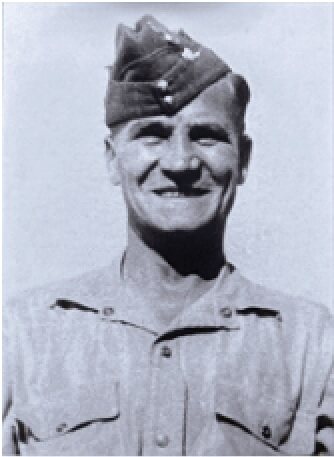
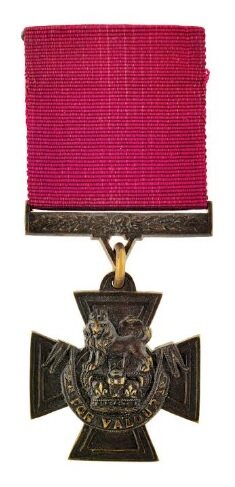
CSM John R. Osborn was selected as a focus for Remembrance on the 85th Anniversary of the Battle of Hong Kong for the reason that he is the most highly honoured of the Hong Kong veterans. He was a recipient of one of 13 Victoria Crosses awarded to Canadian soldiers of the Second World War, and the only one that was awarded for actions during the Battle of Hong Kong.
The Victoria Cross, which is the highest military honour awarded in the British Commonwealth, was awarded to CSM Osborn for an outstanding act of heroism and self-sacrifice on the afternoon of December 19, the worst day of the battle, when he saved the lives of seven fellow soldiers of ‘A’ Company of The Winnipeg Grenadiers. His Victoria Cross citation concludes:
CSM Osborn was an inspiring example to all throughout the defense which he assisted so magnificently in maintaining against an overwhelming enemy force for over eight-and-a-half hours and in his death he displayed the highest quality of heroism and sacrifice.
While CSM Osborn’s medal was awarded April, 1946, in the year following the end of the Second World War, and accepted by Osborn’s widow in Ottawa in January 1947, Osborn’s heroic action was the first deed worthy of a Victoria Cross carried out by a Canadian during the war.
Living in Winnipeg, Margaret Elizabeth Osborn had five children at home: John Robert, (b.1927), Fern, (b.1928), Gerald, (b.1930), George, (b.1933), and Patricia, (b.1936). All but Patricia, now 90 years old and living in Edmonton, are deceased.
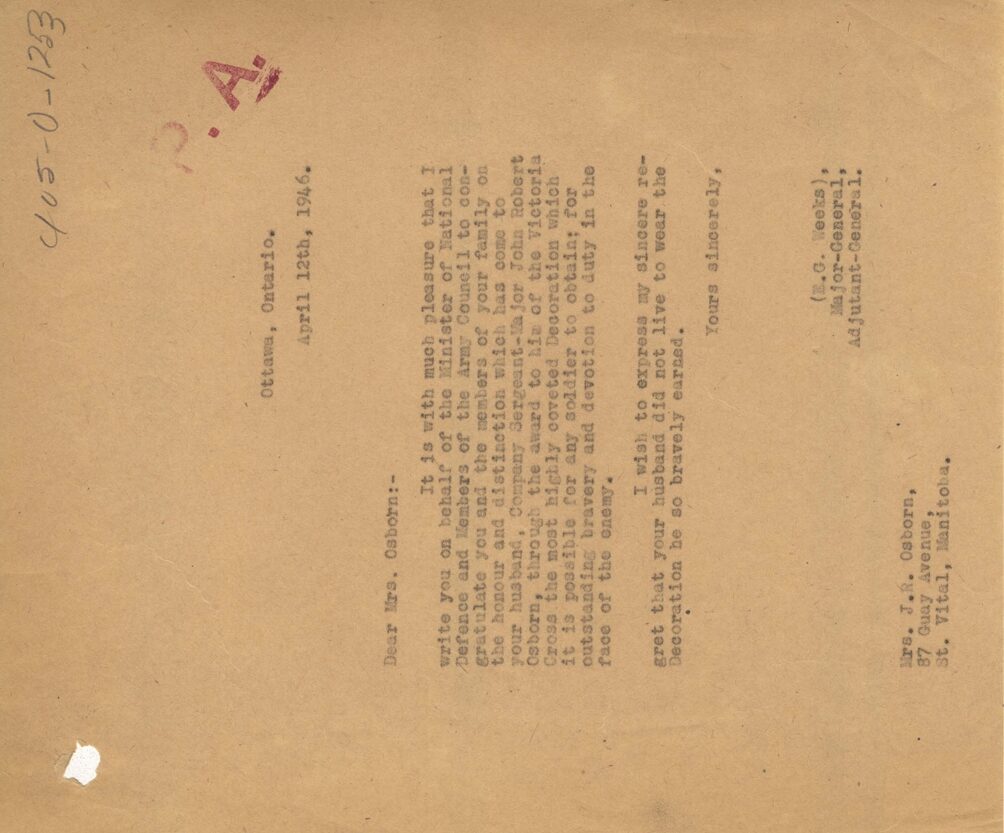
CSM Osborn’s Military Records, or Service file: Library and Archives Canada, H.6008 John Robert Osborn.
There were many honours awarded for acts of bravery during and after the battle by some of the 15,000 soldiers who fought in the defence of the British garrison. Among the Canadian soldiers, 100 honours were awarded, including 40 medals and decorations and 60 Mention-in-Dispatches (An “MiD” is an official military report in which a superior officer recognizes a soldier for bravery or meritorious service in combat). There is a complete listing of these 100 awards on the HKVCA website at C Force Reports and Stats - Decorations and Medals.
Every Hong Kong veteran has a story and each of us has one or more Hong Kong veterans very close to our heart whose story we might know more closely than any other. CSM Osborn is a significant hero whose story might be shared by all of us. While his story does not encompass the entire 4 years experienced by most Hong Kong vets, the account of CSM Osborn’s last afternoon is a small, tragic window on the tragedy and horror of war that the veterans wanted us to know and remember.
4. CSM John R. Osborn’s Victoria Cross
An official account of CSM Osborn’s heroic deed and citation are published on the Government of Canada’s Department of National Defence (DND) website (John Robert Osborn). These two items are reproduced here:
John Robert Osborn was born in Foulden [Norfolk County], England on 2 January 1899. During the First World War, he served in the Royal Naval Volunteer Reserve. Osborn came to Canada in 1920. In 1933, he joined The Winnipeg Grenadiers, a unit of the Non-Permanent Active Militia. When the Second World War began in September 1939, the Grenadiers went on active service and were stationed for a time in Jamaica. In October 1941, at the request of the British Government, the battalion was sent to reinforce the garrison in Hong Kong.
On 8 December 1941, units of the Japanese Army moved against British defences in Hong Kong. By 18 December, three Japanese regiments had landed on the Island. Very early on the morning of 19 December, “A” Company of the Winnipeg Grenadiers was ordered to clear the enemy out of a feature named Jardine’s Lookout, and then to advance on Mount Butler and recapture it. Soon after dawn, part of “A” Company led by Company Sergeant-Major Osborne mounted a bayonet charge and took the summit of Mount Butler. Three hours later, when three companies of Japanese troops counterattacked and forced his men down the western slope of the hill, Osborne calmly directed covering fire to keep the enemy at bay. At length, after Osborne’s party had rejoined the rest of “A” Company, the Japanese managed to surround the whole group.
By mid-afternoon, having driven off two Japanese attacks and with ammunition running low and casualties mounting, the company commander, Major A. B. Gresham, decided to surrender and stepped out into the open with a white flag. He was immediately shot dead by the Japanese, who now began to throw grenades into “A” Company’s position. CSM Osborne picked up several of the grenades and returned them to the enemy. Finally, a grenade fell in a place where Osborne could not retrieve it in time. Shouting a warning as he shoved one man aside, he threw himself on the grenade, which exploded and killed him instantly.
When the story of CSM Osborn’s leadership and sacrifice became known after the defeat of Japan, he was awarded the Victoria Cross.
Citation
At Hong Kong on the morning of the 19th December, 1941, a Company of the Winnipeg Grenadiers to which Company-Sergeant-Major Osborn belonged, became divided during an attack on Mount Butler, a hill rising steeply above sea level. A part of the Company led by Company-Sergeant-Major Osborn captured the hill at the point of the bayonet and held it for three hours when, owing to the superior numbers of the enemy and to fire from an unprotected flank, the position became untenable. Company-Sergeant-Major Osborn and a small group covered the withdrawal and when their turn came to fall back Osborn, single-handed, engaged the enemy while the remainder successfully joined the Company. Company-Sergeant-Major Osborn had to run the gauntlet of heavy rifle and machine gun fire. With no consideration for his own safety he assisted and directed stragglers to the new Company position, exposing himself to heavy enemy fire to cover their retirement. Wherever danger threatened he was there to encourage his men.
During the afternoon the Company was cut off from the Battalion and completely surrounded by the enemy who were able to approach to within grenade throwing distance of the slight depression which the Company were holding. Several enemy grenades were thrown which Company-Sergeant-Major Osborn picked up and threw back. The enemy threw a grenade which landed in a position where it was impossible to pick it up and return it in time. Shouting a warning to his comrades this gallant Warrant Officer threw himself on the grenade which exploded killing him instantly. His self-sacrifice undoubtedly saved the lives of many others.
Company-Sergeant-Major Osborn was an inspiring example to all throughout the defence which he assisted so magnificently in maintaining against an overwhelming enemy force for over eight and a half hours, and in his death he displayed the highest qualities of heroism and self-sacrifice.
London Gazette, no. 37517, 2 April 1946. Also Canada Gazette, 4 April 1946.
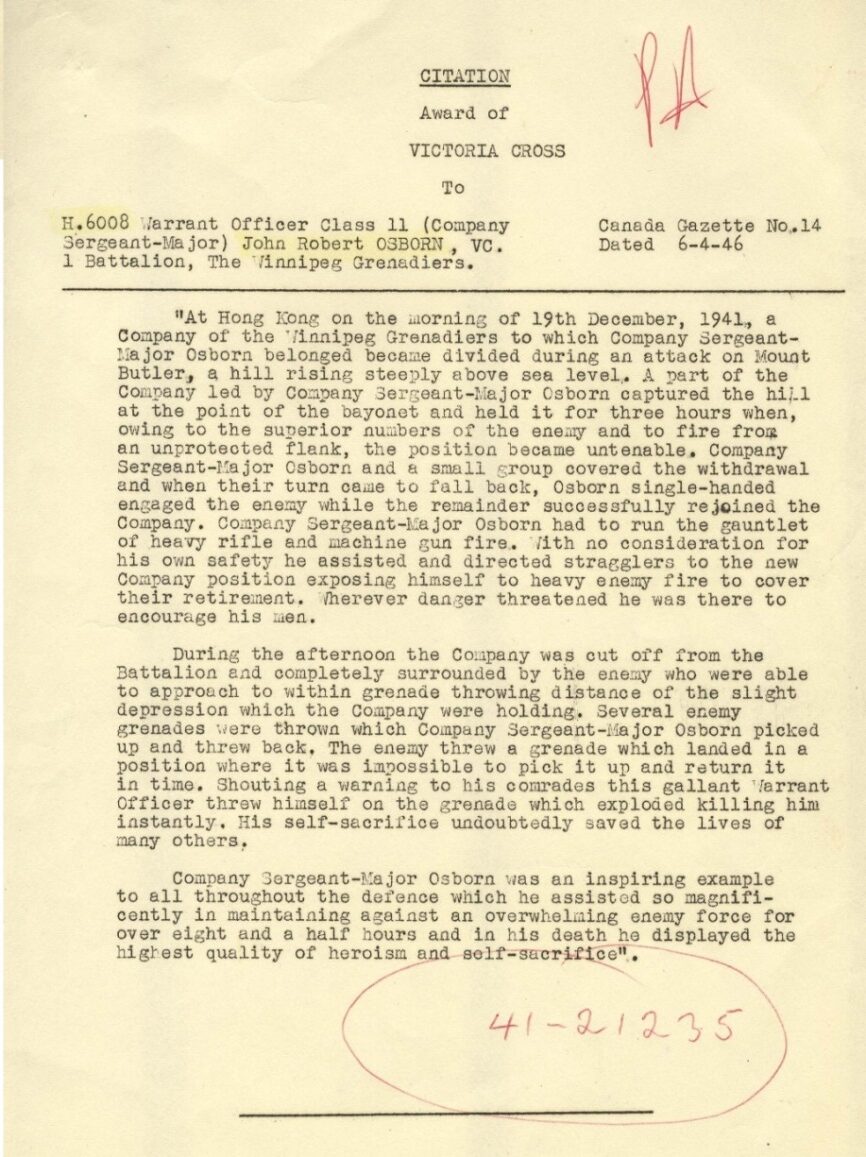
The London Gazette biographical sketch and citation shown above are to be found in Osborn’s HKVCA individual report, H6008. This report includes statements from three soldiers who were near Osborn and witnessed his heroic deed.
5. What is the Victoria Cross?
Queen Victoria established the Victoria Cross in 1856 as the highest and most prestigious military decoration for valour in the presence of the enemy. Although Queen Elizabeth approved a Canadian Victoria Cross, “Pro Valore”, in 1992, it has not yet been awarded.
Of 1,351 Victoria Crosses awarded in the British Empire, 81 went to members of the Canadian Armed Forces: 4 from the South African War, 64 from the First World War, and only 13 from the Second World War. CSM Osborn is a member of a very small group of soldiers distinguished for their “most conspicuous bravery, or some daring or pre-eminent act of valour or self-sacrifice, or extreme devotion to duty in the presence of the enemy.”
Because of a short time in Saskatchewan in the early 1920s, Osborn is one of fifteen Victoria Cross recipients associated with the province and named on the Wall of Honour at the Legislative Building. Each display holds a photograph, a narrative, and replica medals. Encyclopedia of Saskatchewan.
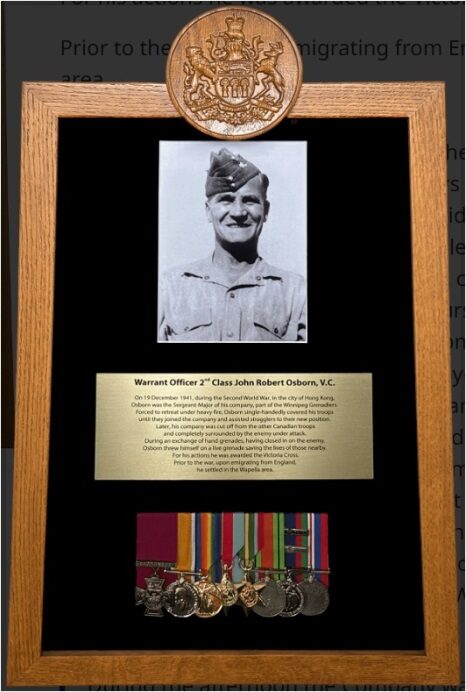
6. Who was CSM John R. Osborn?
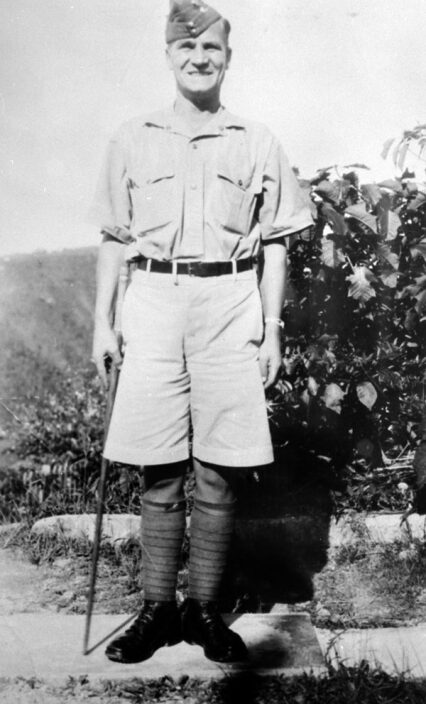
John Robert Osborn was born in Foulden, Norfolk County, England on January 2, 1899. During the First World War, he served in the Royal Naval Volunteer Reserve and was injured in a gas attack in the trenches on the Western Front in north-east France. For health reasons, Osborn came to Canada in 1920. In 1933, he joined The Winnipeg Grenadiers and was soon given the rank of Warrant Officer II and then appointed Company Sergeant-Major. With the Grenadiers he was deployed to Jamaica in 1940 and in October 1941, at the age of 42 and the father of five, he went to the defence of Hong Kong as part of ‘C’ Force.
We are fortunate that we can learn about John Osborn’s earlier years and immediate pre-war period in two very helpful accounts:
From Pulsifer
- He left school young. A schoolmate remembered “a quiet, likable country boy.” He had neither high school nor technical training.
- After the outbreak of the First World War he entered the Royal Navy, with a unit that fought on land and was gassed. Respiratory problems lasted the rest of his life.
- In March 1920, on his doctor’s advice, he moved to Canada, hoping that a drier climate would help.
- He married Margaret Elizabeth Nelson at Gregg, Manitoba, north of Carberry, on 19 May 1926.
- He worked in railroad maintenance in Toronto and then Manitoba. In the late 1920s he tried farming in Saskatchewan and gave it up after an accident in 1929. The Depression then brought intermittent work.
- In 1933, aged 34, with three children and another on the way, he joined the Winnipeg Grenadiers. Within a year he was a Company Sergeant-Major: a man of few words, a strict disciplinarian who expected things to be done by the book, and an extremely capable trainer.
- At home he was a stern parent in the Victorian sense, and devoted to his family. Good will and humour ran under the discipline.
- A medical report of 4 September 1939 found no lung problem. The remaining effect of the gassing was conjunctivitis, which had required coloured glasses. He was not wearing glasses at that examination.
- The report recorded him as 5 feet 5½ inches, 135 pounds, with a tattoo on his right arm.
There are several things in the foregoing description which stand out: his limited schooling, small physical stature, early enlistment in the Royal Navy, a man of few words, a strict disciplinarian, an extremely capable trainer, and a stern parent.
From Green
- He was an under-age recruit, 17, and 5 feet 3 inches when he followed his brothers Harold and Theodore into uniform in late 1916. In these early years he made a lasting impression as a “pocket dynamo” (an informal nickname for someone of small stature who is exceptionally energetic, tenacious, and powerful and typically used to describe athletes or public figures that outperform or outlast larger competitors).
- Barely a fortnight after joining the Hawke Battalion near Flesquières, he was one of more than 500 men hospitalised after a prolonged gas bombardment. Lasting breathing and eyesight troubles followed this poisonous exposure. The British cemetery at Flesquières commemorates over 900 casualties of 1914–18.
- Despite breathlessness, coughing, and conjunctivitis, he proved a perfect fit as a militiaman with the Winnipeg Grenadiers. He was a stickler for discipline, with a tough, uncompromising outlook, and a model soldier and an able trainer. He rose to Company Sergeant-Major within a year.
- … the pint-sized warrant officer with a towering personality
Several terms stand out here in Green’s description: ‘pocket dynamo’, battler, perfect fit as a militiaman, stickler for discipline, tough and uncompromising outlook, a model soldier and an able trainer, and towering personality.
The descriptions of CSM Osborn by Pulsifer and Green and the one available photo of CSM Osborn enable us to readily imagine CSM Osborn in the fall of 1941. At 42 years of age he had been with The Winnipeg Grenadiers for 8 years.
Given CSM Osborn’s British origins and background, it is informative to see and hear a 14-minute British video about his life in the UK and service in the First World War, and then his relocation to Canada and enlistment and service in The Winnipeg Grenadiers (John Robert Osborn VC video).
The Veterans Affairs Canada website has a very good digital gallery with 16 items regarding CSM Osborn (Canadian Virtual War Memorial).
CSM Osborn’s service record and related personnel information is to be found on his file at Library and Archives Canada. Library and Archives Canada, H.6008. However, the file is limited to the period from September 2, 1939 until his death on December 19, 1941. For the prior period, including his early years, we are presently limited to and must depend upon secondary sources, including the reports cited above by Cameron Pulsifer and Mark Green.
7. What is a Warrant Officer? A Company Sergeant-Major?
John R. Osborn was made Warrant Officer Class II soon after enlistment, and a year later was appointed Company Sergeant-Major.
In Commonwealth armies a Warrant Officer is an officer who is a dedicated subject matter expert and instructor who focuses on mastering specific equipment and systems. A Warrant Officer Class II is the administrative and disciplinary leader of a sub-unit of roughly 120 soldiers. A Warrant Officer Class I is senior. Both Warrant Officer ranks typically hold high-level administrative or sub-unit leadership positions, such as Company Sergeant-Major (CSM).
While a Major is the commissioned officer who commands the company and reports to a higher commanding officer, a Company Sergeant-Major is the Major’s right hand responsible for day-to-day administration, training standards, discipline, and morale. In action the Major handles the tactical plan while the CSM’s particular charge is ammunition, supplies, and evacuation of the wounded. In the witness accounts of his heroic deed there is little doubt that CSM Osborn fulfilled this role to the hilt.
We can recall that Major Albert Burton Gresham (12 March 1905 – 19 December 1941) commanded ‘A’ Company. With ammunition low and casualties mounting, he stepped into the open under a white flag to surrender but was shot. Witnesses say Osborn did not hesitate to fill the breach.
During his 8 years with The Winnipeg Grenadiers, CSM John R. Osborn would have become well-versed and well-practiced in matters of discipline and morale. Discipline, in this setting, is self-control under a code of conduct. Morale is the confidence and loyalty that keep a group focused under pressure. Pulsifer and Green leave little doubt that Osborn set the highest standards of morale and discipline throughout his military years, culminating in the “inspiring example” of heroic self-sacrifice on Mount Butler.
A short account of a CSM appointment is provided by CSM Daniel Bradley (1 minute 49 seconds): Role of a Company Sergeant-Major.
8. What was 'C' Force?
CSM John R. Osborn of ‘A’ Company was one of 1,977 members of ‘C’ Force who left Vancouver on 27 October 1941, most not knowing the destination. HMT Awatea and HMCS Prince Robert reached Hong Kong three weeks later to reinforce a garrison of about 12,500 defending the British colony against a possible invasion by the Japanese Army which occupied nearby Canton (Guangzhou) on the Chinese mainland. A third ship, carrying vehicles and heavy equipment, was given up to the Americans mid-voyage.
‘C’ Force was comprised of a brigade headquarters and two main infantry units, The Winnipeg Grenadiers (911 soldiers) and The Royal Rifles of Canada from Valcartier, Quebec (960). Brigade headquarters, led by Brigadier John K. Lawson, included many small support units with a total personnel of 106. (Stats) The Grenadiers had just returned from Jamaica. The Royal Rifles had garrisoned Newfoundland from November 1940 to August 1941, protecting Gander airport and the surrounding region.
There is no official record of the name. ‘C’ most likely stands for Canada. It may also refer to the “C-class” rating of the two battalions: not yet fully trained for active combat. While the Grenadiers had experience in the tropical mountainous and island terrain of Jamaica and the Royal Rifles had experience with coastal conditions, both had many new recruits.
Three weeks after they disembarked, on the morning of 8 December, Japan attacked British, American, and Dutch targets across the Pacific, notably Pearl Harbor and including Hong Kong. ‘C’ Force were the first Canadians of the war to fight in ground combat.
Friday 19 December was the eleventh day, and the fiercest. After crossing Victoria Harbour the day before from the New Territories on the Chinese Mainland and landing on Hong Kong Island, where both Canadian battalions were placed, the Japanese began their attack on the Island early that day. Tony Banham, who documents the battle in extensive detail in Not the Slightest Chance: The Defence of Hong Kong, 1941 (2003), records 451 fatalities in the British and Commonwealth forces that day, the most of the 17-day battle, followed by 285 on 25 December.
The 86 Canadian fatalities included 5 with Headquarters, 65 Winnipeg Grenadiers and 16 Royal Rifles. Three senior Canadian officers were among those killed: Brigadier John K. Lawson, commander of ‘C’ Force; Captain Lyle Thomas Tarbuth, second in command; and Major Albert Burton Gresham. It was in mid-afternoon, after Major Gresham was killed, that CSM Osborn threw himself on the grenade on Mount Butler. His selfless and unforgettable deed would save the lives of seven fellow soldiers of ‘A’ Company of The Winnipeg Grenadiers, and distinguish CSM John R. Osborn forever.
In the following days the forces defending Hong Kong were overwhelmed by more numerous and more heavily armed Japanese troops which also had air and naval supports and constant re-enforcements. On 25 December the garrison surrendered. About 11,000 survivors, including 1,685 Canadians, became prisoners of war. They faced slave labour, torture, starvation, and disease until Japan’s surrender to the Americans on 15 August 1945, an incarceration of 3 years and 8 months.
290 Canadians were killed in the 17-day battle and 264 died in captivity. More than 1,050 were killed (554) or wounded (496), a casualty rate over 50 percent. The 1,421 survivors returned home to face yet another battle, a long fight for recognition and compensation.
Further reading: hkvca.ca; Veterans Affairs Canada, The Defence of Hong Kong; a 2026 film, The Battle of Hong Kong (video).
9. What was CSM Osborn’s deed?
The Victoria Cross was awarded to CSM Osborn posthumously and after the war, unlike most others who received theirs not long after their act of valor, an action that they survived. Osborn’s award came about as a result of Major George Trist, the senior surviving officer of the Winnipeg Grenadiers who had compiled the battalion’s war diary during his captivity, after the war collected witness statements of Osborn’s deed on December 19. A posthumous Victoria Cross was recommended and awarded on that basis.
Cameron Pulsifer quotes three men who were near Osborn. Fuller statements by Corporal Geddes, Sergeant Pugsley, and Private William Moore are on the HKVCA individual report.
I could see them in another gully some distance to my left and from where I was I could see they were surrounded by Japs who were throwing hand grenades into their positions. I opened up with my bren on the attacking Japs and then saw Major Gresham step up out of the gully holding a white handkerchief tied to a stick above his head. He was cut down by machine gun fire.
Corporal Keith Geddes (H17407), ‘A’ Company, 14 January 1946.
I firmly believe that he did this on purpose and by his action saved the lives of myself and at least six other men who were in our group.
Sergeant William John Pugsley (H6809), ‘A’ Company, 12 January 1946. He was beside Osborn. Osborn pushed him clear, then covered the grenade.
A hand grenade came over and it was near some of our boys who hadn’t noticed this, and on C.S.M. Osborn’s sharp alert he fell on this grenade to save the lives of some of our own boys. This man sacrificed his life for the boys that might have been crippled and maimed for life. I say we owe C.S.M. Osborn something for this brave deed that he committed. I will say that he was a real soldier and one of the best that I have known.
Private John David Pollock (H70277), ‘A’ Company.
Mark Green adds further witnesses. Lieutenant Orville McKillop, leading the bayonet charge, lost his way in the undergrowth. Geddes credited Osborn with taking the rush on. McKillop (8 Platoon) died of wounds on 4 January 1942. Lance Sergeant Bill Hall (H6047) remembered Osborn still trying to keep their confidence up. Private William Bell (H6336) called it “the bravest thing we had ever seen.” Mark Green, Victoria Cross Online
Short re-enactments: Historica Canada Minute and The Canadian Encyclopedia.
10. CSM Osborn with his family for only 9 days prior to departure
The Winnipeg Grenadiers were called to active duty on 3 September 1939. CSM Osborn had been with The Winnipeg Grenadiers for 6 years. The Grenadiers stayed in Winnipeg until May 1940, then garrisoned Bermuda and Jamaica for an uneventful 16 months. They returned to Canada in early October 1941 and were ordered almost at once to prepare for another overseas posting.
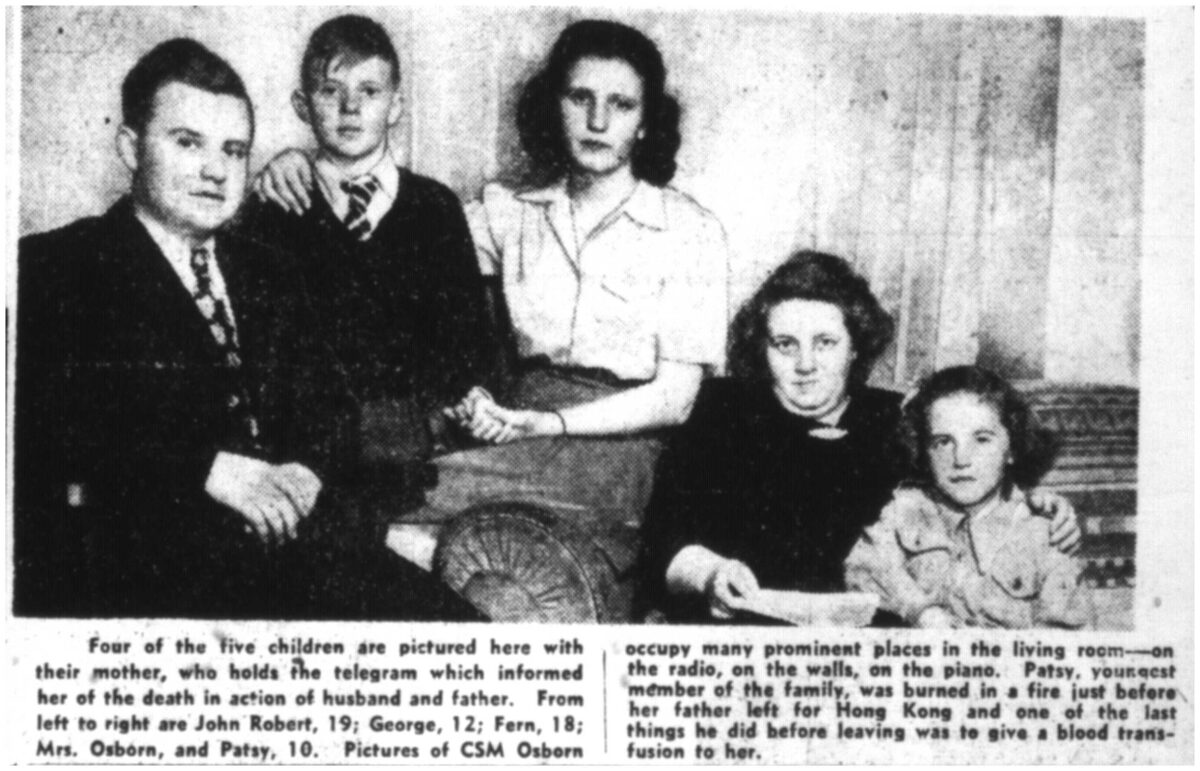
After landing in Montreal on 8 October, Osborn had nine days’ furlough, 11–20 October, then left Winnipeg on 25 October. There were now five Osborn children at home in Winnipeg: John Robert (born 1927), Fern (born 1928), Gerald (born 1930), George (born 1933), and Patricia (born 1936).
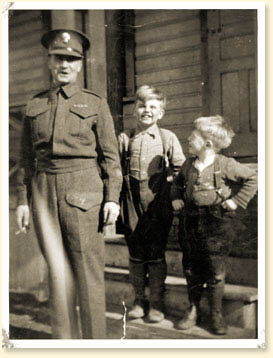
Gerald, then 11, recalled a private talk the night before entrainment. His father told him and John Robert, then 14, that the unit was headed for a dangerous place and that, given the state of training, he doubted its fighting capacity. He said “Take care of mother and the family,” and that he did not expect to return. He had been a prisoner briefly with the Hawke Battalion in the First World War and was not prepared to repeat that dreadful experience again.
Also on that last night before he left, little five-year-old Patricia was badly burned when her dress caught fire near a stove in a neighbour’s house. He stayed at the hospital to give blood. When the train left, he did not know if she would live.
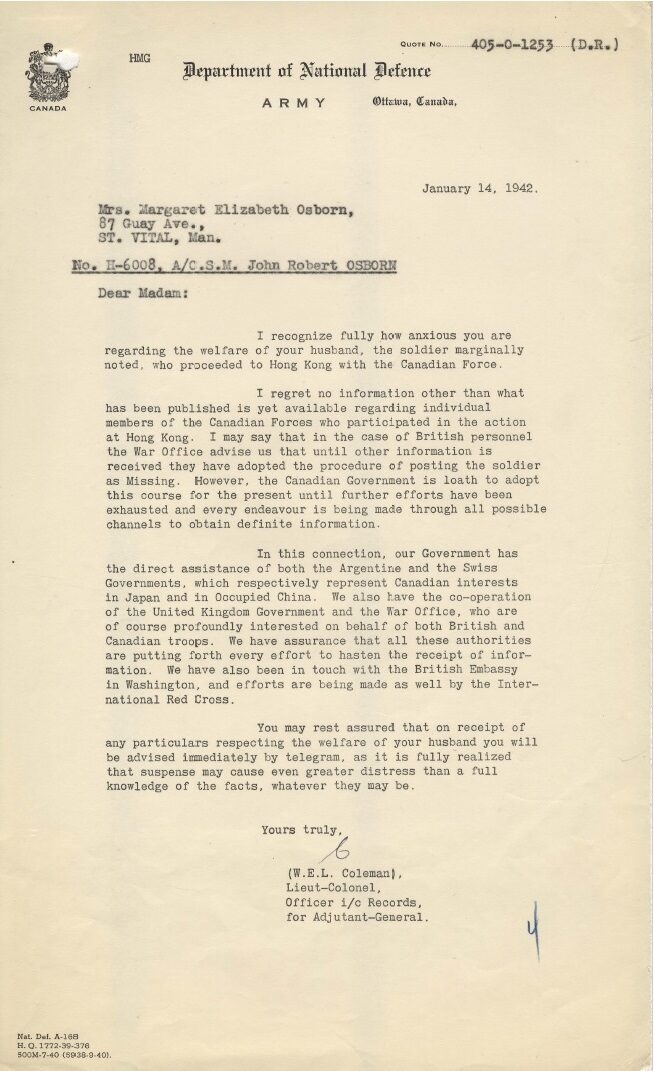
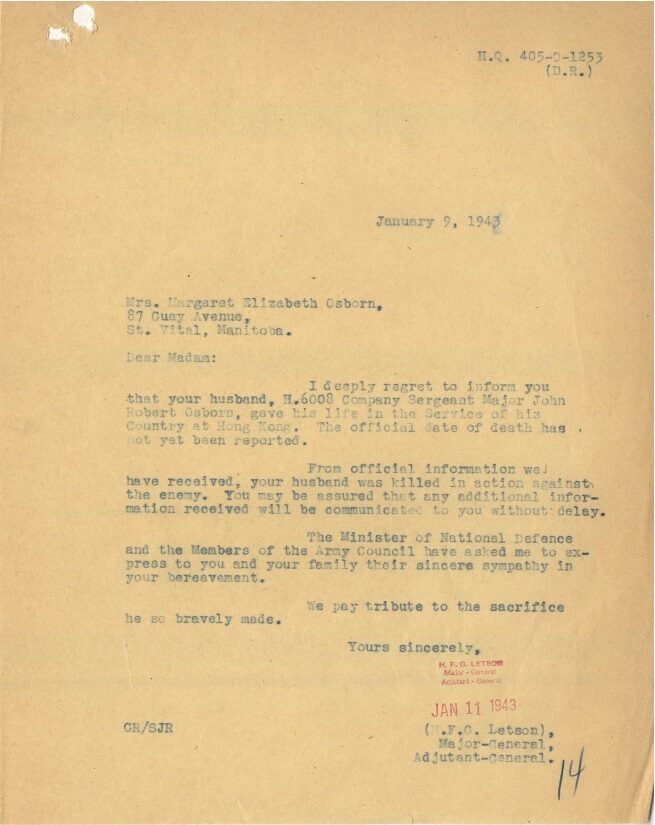
The family were not certain of his fate for about two years. A letter of 14 January 1942 told Mrs. Osborn sympathetically that her husband was still classified as MISSING. In the conclusion it was acknowledged that suspense can cause greater distress than a full statement of the facts. A year later, on 5 January 1943 a telegram from Ottawa confirmed his death. The Adjutant-General’s letter of condolence followed on 9 January.
11. Is there some symbolism in CSM Osborn’s deed?
A short biography and an award citation might be enough for most commemorative ceremonies. However, further exploration can reveal a bigger story, as has been the case in the compilation of information resources about CSM Osborn. And yet, after all the boxes appear to have been checked, there remains one more thing that is remarkable.
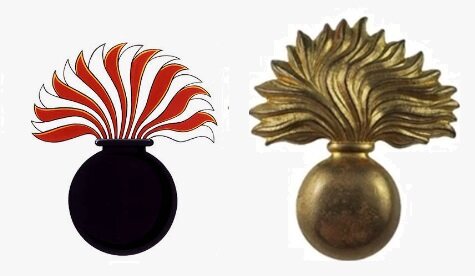
The Winnipeg Grenadiers had a stylized flaming grenade as regimental badge and official emblem, as shown below on the right. A later heraldic form (on the left) is described as “a grenade Sable enflamed Gules and Argent”: the ordnance of the campaigns for which the regiment is known, and the power of the Grenadiers as a fighting force. Red and white are the colours of the regiment and of Canada. Canadian Heraldic Authority, project 371.
Originally formed in Winnipeg in 1908 as the “100th Regiment”, the unit was renamed in 1910 as 100th Winnipeg Grenadiers and The Winnipeg Grenadiers in 1920. The regiment was disbanded on 28 January 1946. On 1 October 1946 a cadet corps at Minto Armoury, formed in 1917, was authorized as 526 The Winnipeg Grenadiers Cadet Corps, and still parades there.
The word “grenade” comes from “pomegranate”, which spills a cluster of seeds when split open. “Grenadier” comes from the eighteenth-century British infantry tradition to designate the elite infantrymen tasked with throwing hand grenades. The role and its name came to mean “highly trained, tough, or physically imposing infantrymen”.
Given the name of his regiment and its regimental emblem and badge, there is some irony, some symbolism perhaps, in Grenadier CSM Osborn throwing himself upon a grenade to confine and limit its deadly impact. And it increases the irony and symbolism to recall that a Company Sergeant-Major is responsible for the company’s ammunition, including grenades.
Warrant Officer Class II and Company Sergeant-Major John R. Osborn VC, small in stature and carrying a First World War injury, showed that a soldier need not be ‘physically imposing’ to be ‘highly trained, tough’ and an extraordinary leader. May CSM Osborn’s heroic leadership and self-sacrifice stand for the many unsung heroes and miracles that brought our fathers home. During the battle, the captivity, and the years that followed, there were many heroes among the Hong Kong veterans: some reported and acknowledged, some not reported, many unseen. In remembrance, we let John R. Osborn stand for all who sacrificed, all who served, and all who put the greater good ahead of their own.
On the 85th anniversary of the Battle of Hong Kong, and of his heroism, we remember Warrant Officer Class II and Company Sergeant-Major John R. Osborn VC, who made the ultimate sacrifice for his fellow soldiers and for our country. Remembering him, and his many fellow soldiers, we join in a prayer for peace, so that those sacrifices were not in vain.
We Remember Them
Assembled and reported by Phil Mondor. Questions: osborn_vc@hkvca.ca.